Phoenix Consultants Group | Custom Computer Programming Phoenix Consultants Group | Custom Computer Programming
  • Custom Software Developers
    • Analyzing Business Needs
    • Custom Application Development
    • Data Collection and Management
    • Form Design & Development
    • Visual Basic Programming Experts
    • Custom Technology Products & Software Solutions for Business
  • .NET Development
    • Business Logic to .NET Architecture:
    • Smarter Decisions with Intelligent Data Systems
    • Custom .NET Software Development
  • Fireflight Data System
    • Fireflight – Project
  • Data Management
    • Managing Legacy Data and Systems
    • Conversion, Migration & Integration
    • Data Management
    • Data Movement & Middleware Integration Services
    • Enterprise Resource Planning
    • Inventory Management Systems
    • Microsoft Access Solutions
      • Access Database Consulting
      • Access Database Design
      • Access for Rapid Data Development
      • Access Database Programming
  • Case Studies
    • ISO 9000 Documentation & Regulatory Compliance Database
    • Superfund Soil Remediation
    • OSHA Training & Certification
    • Ground Water Monitoring
    • Pest Control Reporting Engine
    • Vineyard Pest Trap Management
    • Fueling System for a Top-5 U.S. Metro Fleet
    • Payroll System for a Multi-Facility Physician Staffing Company
    • Ground Support Equipment (GSE) Management System for Airport Operations
    • (MSDS/SDS) Management System
    • Pesticide Licensing Compliance System
    • EPA Title V Air Quality Management System
  • Tech Wisdom
  • Industries We Serve
    • Custom Software Portfolio
  • Blog
  • About Us
  • Contact Us
Phoenix Consultants Group | Custom Computer Programming
  • Custom Software Developers
    • Analyzing Business Needs
    • Custom Application Development
    • Data Collection and Management
    • Form Design & Development
    • Visual Basic Programming Experts
    • Custom Technology Products & Software Solutions for Business
  • .NET Development
    • Business Logic to .NET Architecture:
    • Smarter Decisions with Intelligent Data Systems
    • Custom .NET Software Development
  • Fireflight Data System
    • Fireflight – Project
  • Data Management
    • Managing Legacy Data and Systems
    • Conversion, Migration & Integration
    • Data Management
    • Data Movement & Middleware Integration Services
    • Enterprise Resource Planning
    • Inventory Management Systems
    • Microsoft Access Solutions
      • Access Database Consulting
      • Access Database Design
      • Access for Rapid Data Development
      • Access Database Programming
  • Case Studies
    • ISO 9000 Documentation & Regulatory Compliance Database
    • Superfund Soil Remediation
    • OSHA Training & Certification
    • Ground Water Monitoring
    • Pest Control Reporting Engine
    • Vineyard Pest Trap Management
    • Fueling System for a Top-5 U.S. Metro Fleet
    • Payroll System for a Multi-Facility Physician Staffing Company
    • Ground Support Equipment (GSE) Management System for Airport Operations
    • (MSDS/SDS) Management System
    • Pesticide Licensing Compliance System
    • EPA Title V Air Quality Management System
  • Tech Wisdom
  • Industries We Serve
    • Custom Software Portfolio
  • Blog
  • About Us
  • Contact Us

Tag: tablet to desktop workflow

Last updated: October 2026
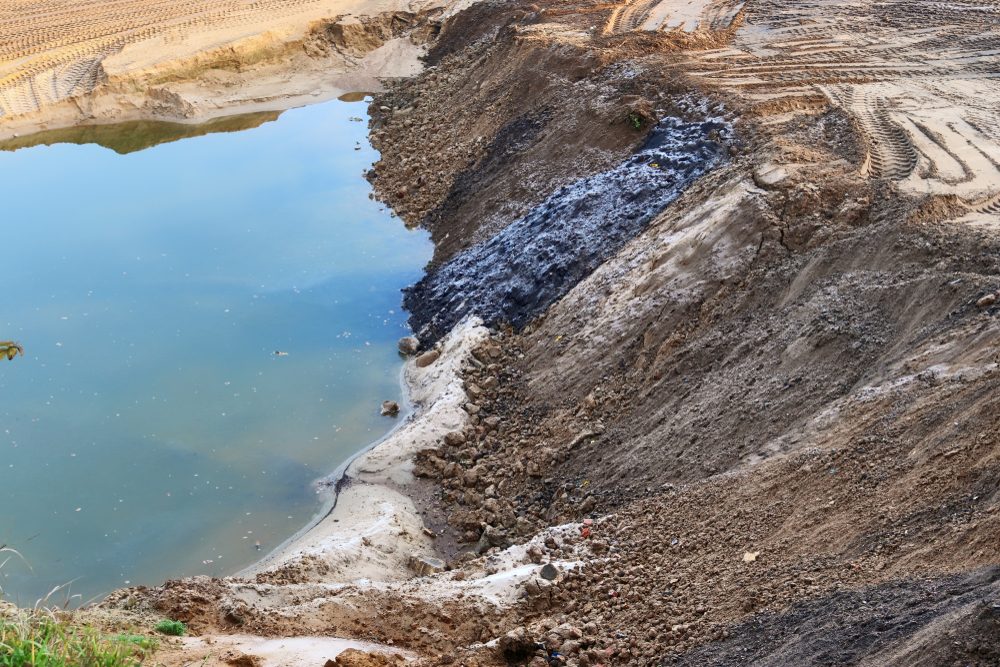
Environmental field technician recording remediation and groundwater monitoring data for regulatory audit reports in 2026
PCG builds custom software for environmental remediation tracking, chain of custody, and audit reporting across Superfund, CERCLA, RCRA, and state DEP programs. The right system fits the specific jurisdictions you report to, connects to your own instruments and lab feeds, and keeps the full data trail under your control for the length of a multi-year audit cycle. PCG has built this kind of system since 1995.

What does remediation tracking software have to do in 2026?

The regulatory ground under environmental programs moved again this year, and tracking software has to keep pace with it. Three developments matter most for the data a remediation program has to capture and defend:

  • PFAS stayed on the CERCLA list. EPA designated PFOA and PFOS as CERCLA hazardous substances in a rule effective July 8, 2024, and in 2026 that designation held: the D.C. Circuit upheld the listing on August 18, 2026, so PFAS sampling, reporting, and chain of custody remain inside the Superfund framework.1,2
  • The TCE exemption path is in flux. The compliance requirements for trichloroethylene uses under TSCA Section 6(g) were not settled this year. EPA postponed them until the pending judicial review concludes, in a final rule published May 5, 2026, which means a program tracking TCE has to be built to adjust as the date and the terms change.3
  • Reporting obligations keep widening. New PFAS reporting under TSCA and the ongoing Five-Year Review cycle on Superfund sites add records a system has to produce on demand, in the format each regulator expects.

The common thread is that the rules move faster than any packaged product's release schedule, and the cost of a missed or mis-formatted report falls on the operator, not the vendor.

Why do off-the-shelf EHS platforms fall short for mid-size firms?

Packaged environmental, health, and safety platforms work well for a standard, single-jurisdiction program. They tend to fall short for a mid-size firm reporting to several regulators at once, in three recurring ways:

  • Reporting templates miss your regulators. A platform ships the report formats its largest customers asked for. A state DEP form or a site-specific Superfund template that is not in that set becomes a manual export and rework job every reporting cycle.
  • Instruments and lab feeds do not connect. Field meters, analytical instruments, and lab result feeds often have no place in a closed platform, so results are keyed in by hand, which is slow and is where chain-of-custody errors enter.
  • The data is not fully yours. Export options vary by contract, and when the data sits in a vendor's closed format, a multi-year audit can outlast the subscription itself.

When does custom software win over an EHS SaaS platform?

Custom software is the stronger call in three situations common to environmental consultancies and regulated operators:

  • Multi-jurisdiction reporting. When you report to more than one regulator, each with its own forms and thresholds, a system built around that specific set produces the reports directly instead of forcing an export-and-rework cycle for each one.
  • Integration with your own instruments and lab systems. When field meters, analytical instruments, or lab result feeds have to flow into the record without manual re-entry, a custom build connects to them; a closed platform usually cannot.
  • Control of the data for a long audit cycle. You own and control the compliance data and the full chain-of-custody trail, in a standard, exportable format, for the entire length of an audit that can run for years, with no vendor able to lock it away or discontinue it. The system runs on standard, documented technology, so it is not tied to a single provider to keep it alive.

For a small, single-jurisdiction firm with a standard program, a packaged EHS product is often the right and cheaper choice, and PCG will say so. The off-the-shelf versus custom software guide lays out that decision in general terms.

See a compliance platform built around your data.

FireFlight is PCG's configurable platform for operations, inventory, compliance, and reporting. Try it for 14 days, no obligation.

Start your 14-day free trial

What has PCG built for environmental programs?

PCG's environmental work goes back to the company's early years, across the programs that generate the most audit pressure.

Superfund soil tracking

Sample tracking and chain of custody for Superfund soil remediation, built to produce the records a site audit demands.

Groundwater monitoring

Monitoring-well data capture and trend reporting over time. Covered in depth in the groundwater monitoring software guide.

EPA Title V air quality

Emissions tracking and reporting for Title V air permits, with the monitoring records the permit requires kept in one place.

HazCom and GHS SDS management

Safety data sheet and HazCom/GHS record management, kept current and searchable for inspections.

What should you ask a developer before signing?

Environmental software is a long commitment, and a few questions separate a firm that will still be useful in year five from one that will not:

  • Does the engagement start with a diagnostic that produces a written scope before any work is committed?
  • Do you own and control your data in a standard, exportable format, with no vendor lock-in on the records themselves?
  • Does the developer have real experience with the regulatory frameworks you report under, not just general software skills?
  • What does post-deployment support look like when a rule changes mid-cycle?
  • Will the same team still be reachable in the later years of an audit?
  • Will the developer tell you honestly when a packaged product would serve you better than a custom build?

Which path fits: full custom or FireFlight accelerated?

PCG delivers environmental systems two ways. Both end in a system fitted to your program; they differ in how much is built from scratch versus assembled from modules PCG has refined over decades.

Full custom development

Built entirely to your program
  • Unusual or highly specific regulatory workflows
  • Deep integration with uncommon instruments or systems
  • Requirements that no existing module covers

FireFlight accelerated custom

Custom delivery, accelerated by modules
  • Common remediation, monitoring, and reporting patterns
  • A faster path to a working system using proven modules
  • Still fitted to your jurisdictions and your data
A regulator does not care which vendor you bought. It cares whether the record is complete, in the right format, and still in your hands years after the work was done.

Start before the next reporting cycle.

Run a 14-day free trial of FireFlight and see how much of your remediation and reporting workflow a configurable platform already covers.

Start your 14-day free trial

Frequently Asked Questions

What regulatory programs can PCG remediation software support?+
PCG builds for Superfund and CERCLA, RCRA, EPA Title V air permits, TSCA obligations including PFAS, and state DEP programs. Because the system is built around the specific jurisdictions you report to, it produces the forms and records each regulator expects rather than a generic export you then rework.
How does the software handle Superfund chain of custody?+
Chain of custody is tracked from field sample through lab result to final report, with each handoff recorded so the trail can be reconstructed for an audit. Capturing results directly from instruments and lab feeds, rather than re-keying them, is what keeps that trail intact, since manual re-entry is where custody errors usually enter.
Do we own our data and the compliance records?+
Yes. You own and control the compliance data and the full chain-of-custody trail, in a standard, exportable format, for the entire length of an audit cycle. The records are not held in a closed vendor format that a subscription lapse could put out of reach, which matters when an audit runs longer than any contract.
Is custom software overkill for a small environmental firm?+
Often, yes. A small firm running a standard, single-jurisdiction program is usually well served by a packaged EHS product, and PCG will say so directly. The case for custom appears when you report to several regulators, need to connect your own instruments or lab systems, or have to hold the data under your own control for a long audit.
How long does an environmental tracking system take to build?+
The diagnostic determines the project timeline. The scope depends on how many jurisdictions you report to, which instruments and lab feeds have to connect, and how much of the workflow existing FireFlight modules already cover, which can shorten the path considerably. PCG sets the timeline against your specific program rather than quoting a figure in advance.
What happens when a regulation changes after the system is built?+
Rules in this field move constantly, as the 2026 PFAS and TCE developments show. PCG builds the system so reporting formats and thresholds can be adjusted as the rules change, and a monthly support arrangement keeps those updates flowing rather than leaving each change as a new project.
About the Author

Allison Woolbert, CEO and Senior Systems Architect, Phoenix Consultants Group

Allison's experience in software development goes back to the early 1980s, predating PCG's founding in 1995. She has spent decades solving the hardest data problems in business, working with Fortune 500 corporations, growing mid-size firms, and small businesses across industries ranging from manufacturing and fleet management to healthcare staffing and regulatory compliance.

Her work includes mission-critical data systems built with corporations such as ExxonMobil, Nabisco, and AXA Financial, environments where information de-sync between operational units carries direct financial consequences. FireFlight Data System is the product of everything she learned: a unified, purpose-built engine designed to eliminate the structural failures she encountered and fixed throughout her career.

LinkedIn

1 U.S. EPA, final rule designating perfluorooctanoic acid (PFOA) and perfluorooctanesulfonic acid (PFOS) as CERCLA hazardous substances, effective July 8, 2024. epa.gov

2 U.S. Court of Appeals for the D.C. Circuit, Chamber of Commerce v. EPA, No. 24-1193, decided August 18, 2026, upholding EPA's designation of PFOA and PFOS as CERCLA hazardous substances.

3 U.S. EPA, final rule postponing the compliance dates for trichloroethylene (TCE) uses with TSCA Section 6(g) exemptions until pending judicial review concludes, published May 5, 2026. epa.gov

This article is informational and not legal, regulatory, or technical advice for a specific situation. Environmental regulations change frequently and vary by jurisdiction; confirm current requirements with the relevant agency, and let the diagnostic determine what a system for your program needs to do. Phoenix Consultants Group has provided custom software development since 1995.
Last updated: October 2026
AI integration connects your existing software directly to AI, so your team can query live data in plain English, hand repetitive work to automated agents, and move tasks between field and office without re-entering anything. It fits best when the underlying platform is supported and the data is clean. When it is not, migration comes first.

Why does AI integration matter for operations software in 2026?

Decision speed is where the advantage shows up. A team that can ask its own live data a question and get an answer back moves faster than one waiting on a report someone has to assemble. AI integration removes that wait by putting a plain-English layer over the systems you already run, so the people doing the work get the answer at the moment they need it.

What changed in 2026 is that governance and data quality now decide whether any of this holds up. Gartner predicts that by 2030, half of AI agent deployment failures will trace back to insufficient governance enforcement rather than to the models themselves.1 Gartner also named poor data quality a leading direct cause of failed AI projects.2 The lesson for a business is plain: AI integration pays off on a supported platform with structured, trustworthy data, and it does not rescue a system that lacks either.

What does AI integration actually do for your operation?

PCG builds three kinds of integration, each matching a different operational need. A project can start with one and add the others as the business sees the value.

Natural language data access

Ask your live data questions in plain English. No SQL, no waiting for a report. The answer comes from your actual database, not a dashboard someone built six months ago.

Desktop agent automation

Automated agents handle the tasks your team runs by rote: routing records, flagging exceptions, producing routine output. Your staff keeps the work that needs judgment.

Field-to-office task handoff

Technicians log findings and set tasks on a tablet. Office staff see them at once, with full context. Nothing is re-entered, and nothing is lost between field and office.

Can AI run entirely on our own hardware?

Yes. For operations that require data sovereignty, whether for regulatory, confidentiality, or liability reasons, PCG deploys self-hosted Ollama. It runs AI models entirely on your own hardware, so nothing leaves your building: not a query, not a response, not metadata. Cloud providers offer strong security certifications, but data does leave your infrastructure. When that is unacceptable, self-hosted is the only path that genuinely keeps the data where it is.

This serves environmental compliance and industrial operations where regulatory rules make a cloud model impractical regardless of its certifications. PCG assesses the hardware and the models that fit your workload during the diagnostic.

Should you add AI to older software, or migrate first?

The answer depends entirely on whether the platform is still viable. A supported custom stack with clean data can take on AI integration without disruption. A platform that no longer receives active development, Microsoft Access being the common case, does not justify AI investment on a foundation that is already failing, and the 2026 data backs this up: Gartner ties failed AI projects to poor data quality, and a dead platform is where poor data quality lives.2

For those situations, migration to FireFlight Data System is the path PCG recommends, with AI-powered natural-language reporting built into the architecture from the start rather than bolted on afterward. PCG has handled Microsoft Access migrations since 1995. The Microsoft Access Exit Strategy covers that case in full.

See AI-powered reporting running on a real platform.

FireFlight is PCG's configurable platform, with natural-language reporting built in. Try it for 14 days, no obligation.

Start your 14-day free trial

Which path fits your situation?

The split comes down to the state of your current platform and your data. One of these two columns usually describes a business clearly.

AI integration fits when

Your platform is healthy
  • The software runs on a currently supported stack
  • Core workflows run reliably without daily workarounds
  • Data is structured consistently in the current database
  • You want plain-English queries, desktop automation, or field-to-office handoff
  • Replacing the system now would disrupt the operation

Migrate to FireFlight when

Your platform is holding you back
  • The platform no longer receives active development
  • Only one or two people understand how it works
  • Maintenance cost is rising while reliability falls
  • You need AI reporting from day one
  • The current platform carries security or compliance exposure
AI does not fix a broken foundation. On a supported platform with clean data it is an advantage; on a failing one it is money spent propping up the thing you should be replacing.

What does the path to AI integration look like?

PCG runs the work as a diagnostic first, then a scoped build. The diagnostic maps your data structure, confirms whether the platform supports integration, and sets the scope and timeline for the specific project rather than promising a figure in advance.

  • Diagnostic. PCG reviews the current systems, the state of the data, and the platform's viability, then tells you whether integration or migration is the right path for your situation.
  • Scope. With the diagnostic done, PCG defines which integration types fit, which AI provider suits the data sensitivity, and what the project involves. The diagnostic determines the project timeline.
  • Build and validation. PCG builds the integration against your live data, with access logged and role-controlled, and validates it against real workflows before it goes into daily use.

For orphaned software whose original developer has gone, the diagnostic includes reverse-engineering the data structure first. Once that map exists, connecting an AI layer to the underlying database is standard work. The My Developer Disappeared guide covers that starting point.

Not sure whether to integrate or migrate?

Start a 14-day free trial of FireFlight and see AI-powered reporting on a platform built for it, before you decide.

Start your 14-day free trial

Frequently Asked Questions

What is AI integration for business systems?+
AI integration connects your existing software directly to AI so your team can query live data in plain English, hand repetitive tasks to automated agents, and move work between field and office without re-entering it. The AI layer reads from your actual database, so the answers reflect your operation as it stands today, not a generic description of how businesses like yours usually work.
We are running Microsoft Access. Should we integrate AI or migrate first?+
Migrate. Access no longer receives active development, and adding AI on top of it does not change that. Gartner ties failed AI projects to poor data quality, and a platform that is no longer maintained is where poor data quality lives. FireFlight is the path PCG recommends, with AI-powered natural-language reporting built into the architecture from the start. PCG has handled Access migrations since 1995, and the diagnostic maps your data before any commitment.
What is Ollama, and when would we use it instead of Claude or GPT?+
Ollama runs AI models entirely on your own hardware. Nothing is transmitted to an external server: not a query, not a response, not metadata. For operations that require data sovereignty, whether for regulatory, confidentiality, or liability reasons, Ollama is the one path that genuinely keeps the data inside your building. Cloud providers offer strong security certifications, but data does leave your infrastructure. When that is unacceptable, Ollama is the choice.
How does AI integration address security in our older systems?+
An inactive platform usually carries outdated encryption, no modern audit trail, and legacy access controls. AI integration does not remediate those directly, but it adds an authenticated, monitored access layer on top: every query through the AI layer is logged, role-controlled, and auditable. That is a meaningful improvement over direct access through interfaces that predate current oversight standards, though it is not a substitute for replacing a platform whose security exposure is severe.
How is this different from using ChatGPT or Copilot directly?+
ChatGPT and Copilot know nothing about your specific database, workflows, or years of records. Asking them about your data produces either non-answers or plausible but unfounded ones, disconnected from your actual records. A PCG AI integration is connected to your data: the natural-language interface queries your live database and returns answers drawn from your operation as it stands today.
Can you add AI to software built by a developer who no longer works with us?+
Yes. PCG regularly works with orphaned software where the original developer has gone and documentation is thin. The diagnostic includes reverse-engineering the data structures to understand what the system holds and how it is organized. Once that map exists, connecting an AI layer to the underlying database is standard work, provided the platform itself remains viable.
About the Author

Allison Woolbert, CEO and Senior Systems Architect, Phoenix Consultants Group

Allison's experience in software development goes back to the early 1980s, predating PCG's founding in 1995. She has spent decades solving the hardest data problems in business, working with Fortune 500 corporations, growing mid-size firms, and small businesses across industries ranging from manufacturing and fleet management to healthcare staffing and regulatory compliance.

Her work includes mission-critical data systems built with corporations such as ExxonMobil, Nabisco, and AXA Financial, environments where information de-sync between operational units carries direct financial consequences. FireFlight Data System is the product of everything she learned: a unified, purpose-built engine designed to eliminate the structural failures she encountered and fixed throughout her career.

LinkedIn

1 Gartner, "Gartner Announces Top Predictions for Data and Analytics in 2026": by 2030, 50% of AI agent deployment failures will be due to insufficient AI governance platform runtime enforcement. March 11, 2026. gartner.com

2 Gartner, press release citing poor data quality or limited data availability as a leading direct cause of failed AI projects, April 7, 2026. gartner.com

This article is informational and not legal, financial, or technical advice for a specific situation. Whether AI integration or migration is right depends on the particular business, its platform, and its data; the diagnostic exists to determine it. Phoenix Consultants Group has provided custom software development since 1995.
Recent Posts
  • You Know the Vendor Is Underperforming. You Just Can’t Prove It With Data.
  • Which Location Has It? Why Multi-Site Inventory Always Gives the Wrong Answer
  • Returns Don’t Manage Themselves. Here’s What Happens When Nobody Owns the Process.
  • Work Order Management Failures: The Real Cost
  • The Production Report Takes Longer to Build Than the Shift It Covers

Drop us a line! We are here to answer your questions 24/7

NEED A CONSULTATION?

Contact Us
Phoenix Consultants Group - Custom Computer Programming
Phoenix Consultants Group is a Minority Women and Veteran Owned business
LGBT-Owned

Copyright © 2021-2026. All Rights Reserved | Phoenix Consultants Group

Privacy Policy  |  Terms of Use  |  Legal  |  Security  |  Support
Solutions
  • Turning Ideas into Solutions
  • Smarter Decisions with Intelligent Data Systems
  • Custom .NET Software Development
  • Custom Application Development
  • Data Collection & Management
Data Management
  • Conversion, Migration & Integration
  • Custom Database Programming
  • Data Movement Services
  • Full Custom Data Management
  • Inventory Management Systems
Small Data Systems
  • Access Database Consulting
  • Access Database Design
  • Access Database Programming
Additional Services
  • Visual Basic Legacy Programming
  • Form Design & Development
Our Company
  • About Phoenix Consultants Group
  • Contact Us
  • Our Blog & News
  • Portfolio & Projects

Subscribe

Subscribe to our mailing list and you will always be updated with the latest news.

[newsletter_form type=”minimal”]

Phoenix Consultants FacebookPhoenix Consultants LinkedIn   Phoenix Consultants Instagram